

Sustainable Home Decor: How to Furnish Your Home Consciously
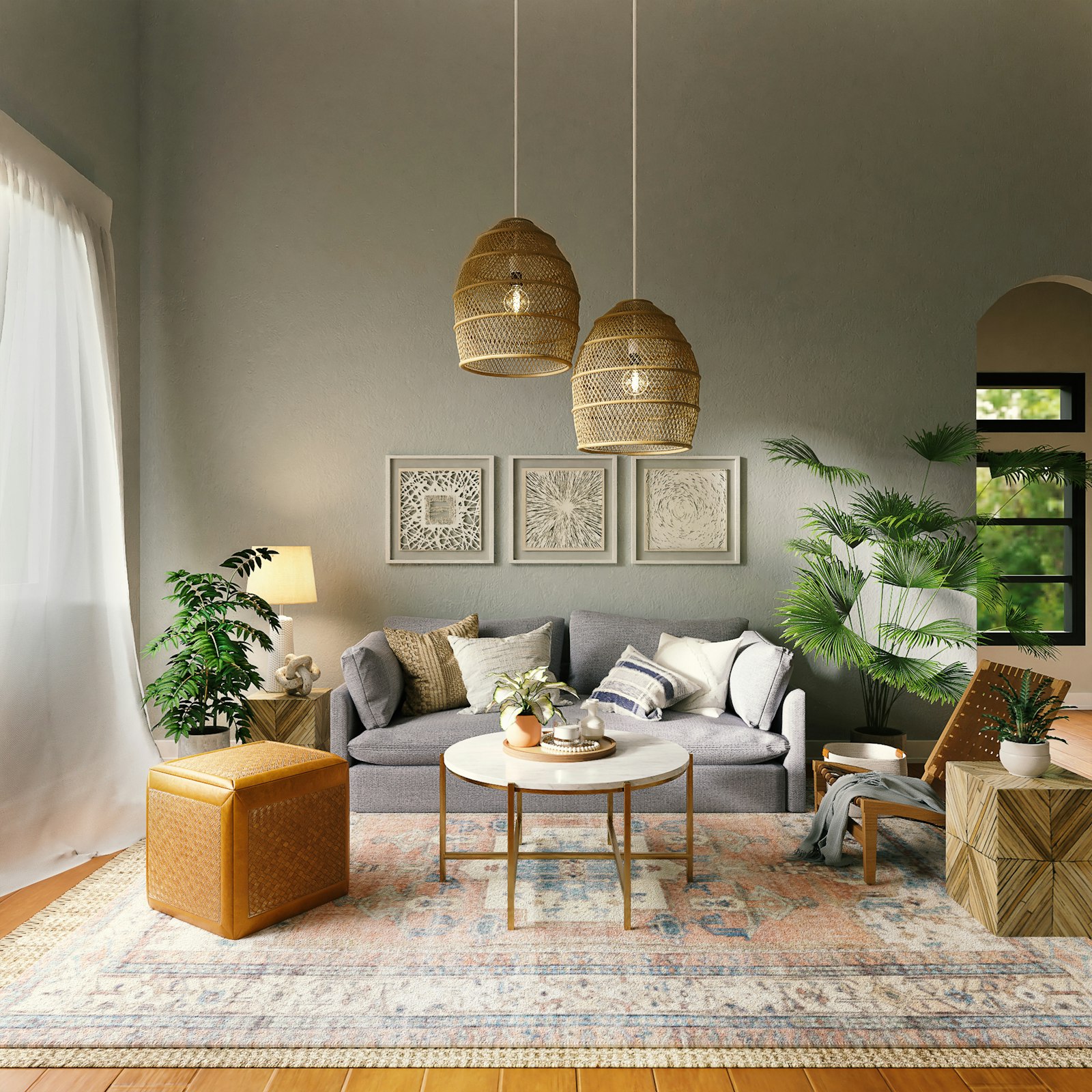
The question of how to furnish a home sustainably — how to create a beautiful, comfortable domestic environment while minimizing the environmental impact of the choices involved — is one that an increasing number of home decorators are asking seriously, and the answers are more nuanced and more interesting than either the guilt-laden prescriptivism of environmental absolutism or the dismissive shrug of those who feel the question itself is too difficult to engage with honestly.
The honest starting point is that there is no such thing as a truly zero-impact home. Every furnishing, every textile, every piece of art represents resources extracted, energy consumed, labor expended, and waste generated. The question is not whether to have impact but how to minimize it while maintaining the quality of domestic life that makes home genuinely sustaining rather than merely functional. This reframing — from guilt-driven avoidance to thoughtful minimization — is what allows sustainable home decoration to be a positive creative practice rather than an exercise in self-denial.
The Hierarchy of Sustainable Choices
The most useful framework for thinking about sustainable home decoration is a hierarchy of choices ranked by their environmental impact, from most beneficial to least. At the top of the hierarchy is using what you already have: the most sustainable piece of furniture is one you already own, because its environmental cost has already been paid and no additional resources are required to keep using it. The discipline of living with what you have — of repairing, reupholstering, or refinishing existing pieces rather than replacing them — is the single most effective sustainable home practice, and it is one that often produces interiors of more character and individuality than buying new.
Second in the hierarchy is buying secondhand: acquiring furniture, textiles, and accessories that already exist rather than buying new production. The environmental mathematics are compelling: a secondhand piece requires no new manufacturing, no new raw materials, no transportation from factory to retailer. The aesthetic mathematics are equally compelling: the secondhand market contains an enormous range of quality and character — vintage, antique, and previously loved pieces — that the new furniture market cannot match.
Natural and Renewable Materials
When buying new is the appropriate choice — when existing pieces are not available in the right size or configuration, or when the category of item simply does not exist in the secondhand market in usable condition — the most sustainable approach is to prioritize natural, renewable materials over synthetic ones. Wood from certified sustainable forestry, natural fiber textiles (cotton, linen, wool, jute, sisal, hemp), and ceramics from local or regional producers are all significantly less environmentally impactful than their synthetic alternatives, and they typically outlast synthetic materials by significant margins.
The durability dimension of material choice is particularly important in the sustainability calculus, because a piece that lasts twenty or thirty years has a far smaller annual environmental impact than a cheaper piece that lasts five. The mathematics of quality — the recognition that buying less but buying better has both economic and environmental advantages over buying more and replacing frequently — is one of the most practically useful frameworks for sustainable home decoration.
Living Beautifully with Fewer, Better Things
The deepest form of sustainable home decoration is perhaps the simplest: the commitment to living with fewer things of higher quality rather than more things of lower quality. This is not minimalism in the austere, stylized sense — it is not about empty rooms or the conspicuous absence of comfort and beauty. It is about the careful accumulation of objects that are genuinely beautiful, genuinely useful, and genuinely durable, and the corresponding restraint about adding objects that are merely novel, merely convenient, or merely cheap. Explore our curated collection at Little-Chapter.com for home decor and furnishings chosen with both beauty and longevity in mind — pieces that are made to be kept, loved, and passed on.