

Statement Lighting Fixtures That Become the Star of Any Room
Lighting is the element of interior design that is most consistently underestimated by homeowners and most obsessed over by professional designers, and the gap between these two attitudes explains most of the difference between rooms that merely look nice and rooms that feel genuinely extraordinary. A beautiful room with poor lighting is a beautiful room that cannot be fully seen or felt. An ordinary room with exceptional lighting becomes something else entirely — dimensional, atmospheric, alive in a way that the furniture and accessories alone could never achieve.
Statement lighting fixtures — pendants, chandeliers, sculptural wall sconces, oversized floor lamps — sit at the intersection of function and sculpture. They are objects that justify their existence on pure aesthetic grounds while simultaneously serving the practical need for light. The best statement fixtures are those where the design of the object and the quality of the light it produces are inseparable — where the way the fixture looks when lit is as extraordinary as the way it looks when dark.
The Pendant Light: Anchor of the Modern Interior
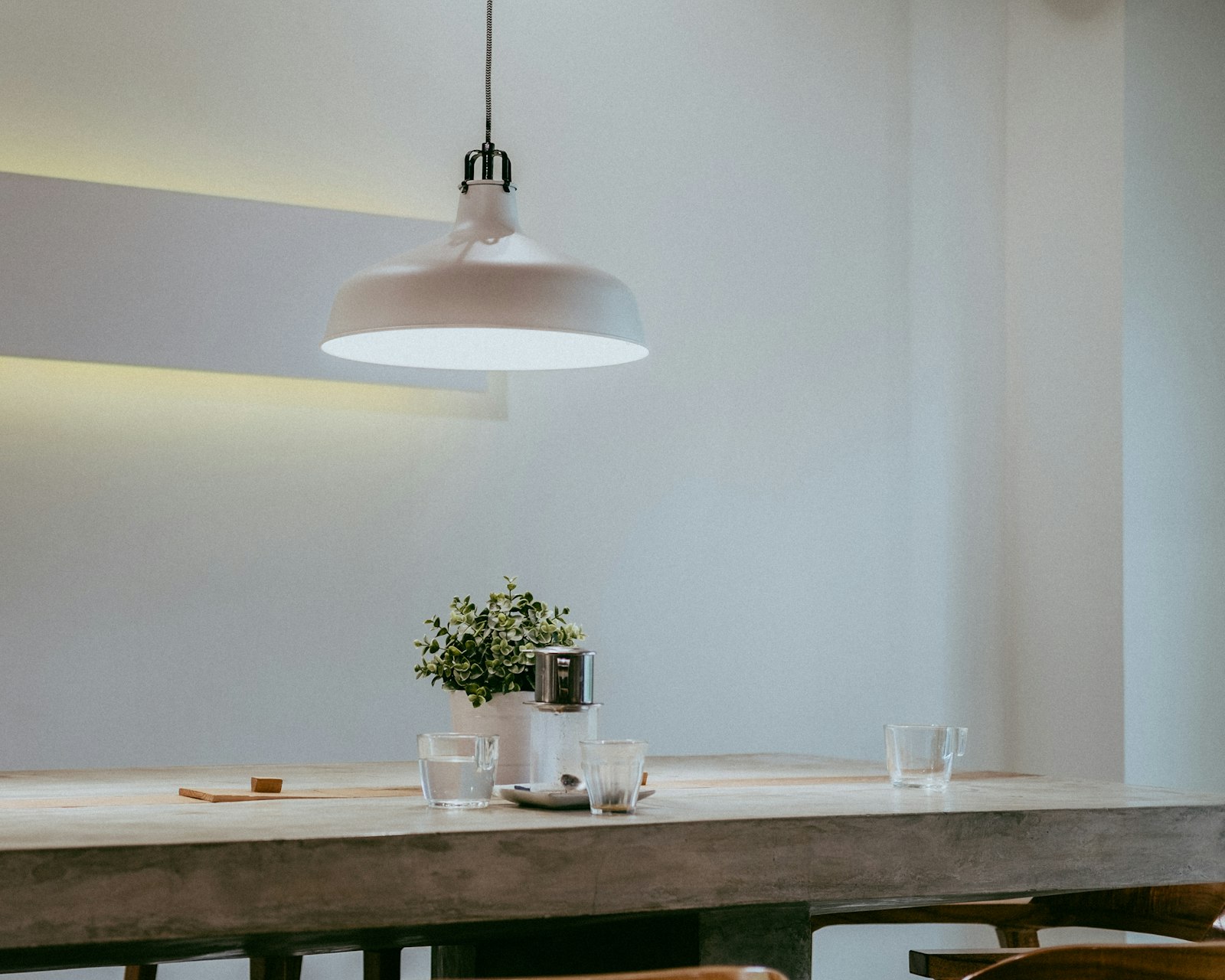
The pendant light — a fixture suspended from the ceiling on a cord, rod, or chain — is the most versatile and most impactful statement lighting option in contemporary interiors. Hung over a dining table, a kitchen island, a bedside table, or simply in a corner where a sculptural object is needed, the pendant light anchors a room with architectural precision and creates a focused zone of warmth and illumination.
The scale of a pendant light relative to the surface below it is crucial. A pendant hung over a dining table should be wide enough to create a canopy of light that covers the table generously — a common guideline is that the pendant diameter should be about half the table width, or that two or three smaller pendants should together span most of the table length. The bottom of the pendant should hang 28 to 32 inches above the table surface — low enough to create intimacy and focused light, high enough to avoid blocking eye lines across the table.
Material and form in pendant selection should relate to the room's existing aesthetic while introducing an element of surprise or elevation. A rattan or woven pendant over a wooden dining table brings complementary organic warmth. A sculptural glass pendant in the same setting creates an elegant contrast. A dramatic oversized pendant in blackened steel or aged brass makes a stronger statement, anchoring the room with genuine visual weight. The wrong choice is a pendant that merely adequate — functional but uninspiring, filling the space without adding anything to it.
The Chandelier: Drama at Ceiling Height
The chandelier has been the definitive statement lighting fixture in formal interiors for centuries, and it remains one of the most powerful tools in the contemporary designer's arsenal — not in spite of its associations with grandeur and tradition but because of them. A chandelier in an unexpected context — a simple, rustic chandelier in a rough-plastered dining room, a spare, geometric chandelier in a mid-century modern living room, an elaborate vintage crystal chandelier in an otherwise pared-back bedroom — creates a jolt of surprise and elevation that makes the room unforgettable.
The scale rule for chandeliers in living and dining rooms: add the room's width and length in feet, and the resulting number, converted to inches, gives an approximate appropriate chandelier diameter. A 12 by 16 foot room would suit a chandelier approximately 28 inches in diameter. This rule produces results that often feel surprisingly large relative to what most homeowners would instinctively choose, which is part of why professionally designed rooms with their boldly-scaled fixtures look so different from typical home décor.
Sculptural Floor Lamps
The floor lamp is the most undervalued category in statement lighting. While pendant lights and chandeliers get the design press, a beautifully chosen floor lamp in a living room corner provides layered light at exactly the height and angle needed for reading and conversation, creates a warm focal point in an area that might otherwise feel unresolved, and contributes a sculptural quality that holds its own against furniture and art. The arc floor lamp — with its sweeping arm that extends light over a seating area from the side rather than directly above — is one of the most useful designs in contemporary interiors, filling the zone above a sofa or reading chair where no ceiling fixture can reach.
For maximum impact, choose a floor lamp with an interesting form — a sculptural base in marble, brass, or concrete, an arm that describes a confident geometric curve — rather than a standard, forgettable pole-and-shade combination. The shade itself is a design element: a translucent linen shade creates a warm, diffused glow; a metal shade directs light more precisely and makes a stronger visual statement; a sculptural shade in rattan or paper creates its own pattern of light and shadow on the surrounding walls.
Wall Sconces: Architectural Light
Wall sconces do something that no other light fixture can: they integrate light directly into the architecture of the room, making illumination a structural element rather than a surface addition. Properly chosen and placed sconces — flanking a bed headboard, lighting either side of a fireplace, creating a corridor of warmth down a hallway — give a room a formal, completed quality that is difficult to achieve any other way.
Swing-arm sconces are particularly versatile, offering the directional flexibility of a table lamp with the clean, wall-mounted installation of a fixed sconce. In a bedroom, a pair of swing-arm sconces on either side of the bed eliminates the need for bedside tables (or at least frees up that surface), provides perfectly positioned reading light, and creates a symmetrical, hotel-quality composition that makes even a modest bedroom feel deliberately and beautifully designed.
Layering Light Sources
The true skill in lighting design — whether working with statement fixtures or more modest ones — is layering. A room with a single light source, regardless of how beautiful that source is, has flat, one-dimensional illumination. A room with layered lighting — ambient light from the ceiling, task light from targeted fixtures, accent light from smaller decorative sources — has depth, mood, and the ability to modulate its atmosphere through the day and evening. Use your statement fixture as the primary anchor, then build around it with additional sources that fill in the lighting layers it doesn't cover. The result is a room that looks extraordinary in photographs and feels magnificent to live in. Explore our curated collection at Little-Chapter.com for beautifully designed lighting fixtures that transform ordinary rooms into extraordinary spaces.