

Minimalist Living Room Design: How to Create a Calm, Purposeful Space
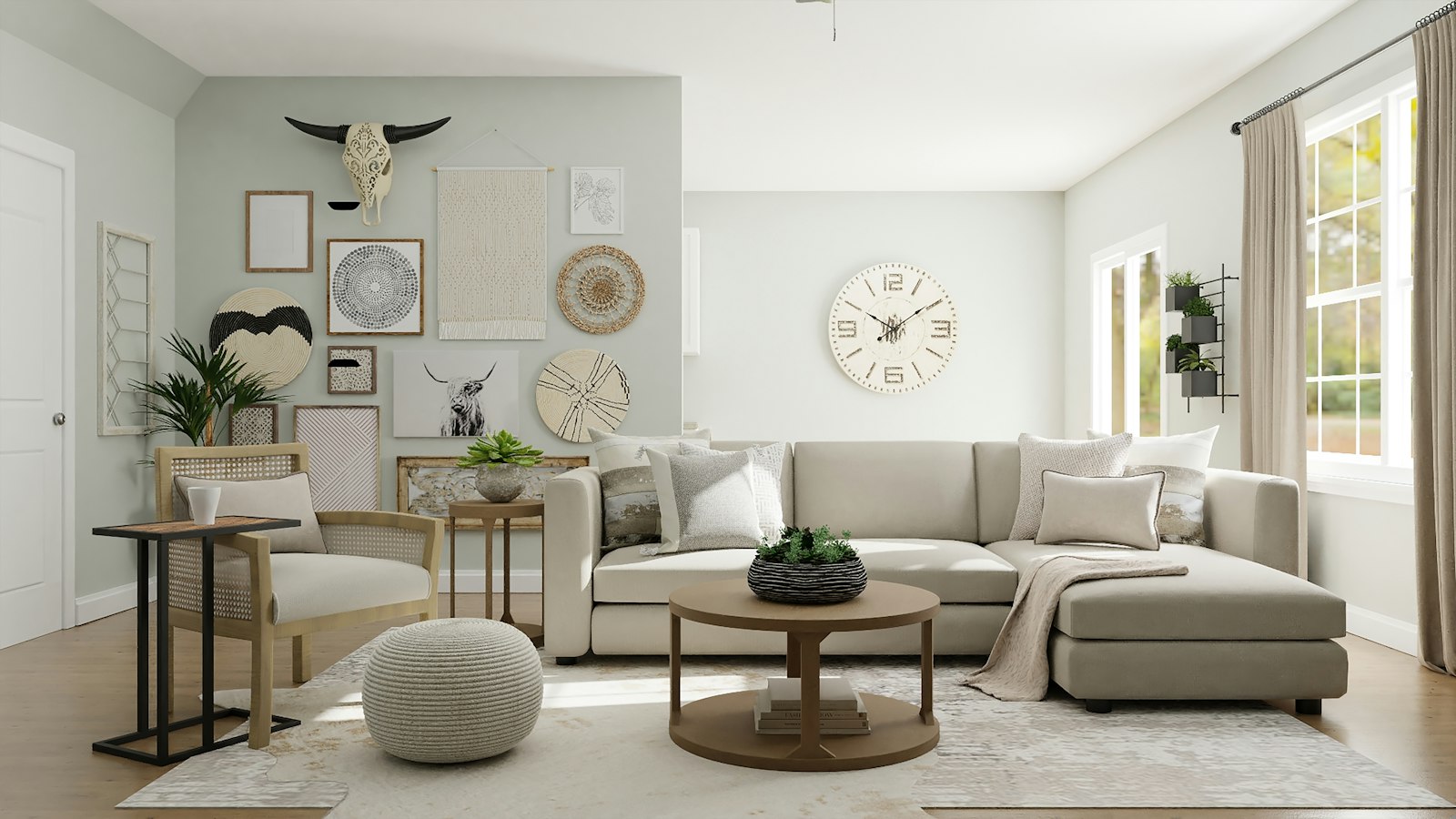
There is something quietly transformative about walking into a room that holds only what it truly needs. No visual clutter demanding your attention, no surfaces buried under items that haven't been touched in months — just open, breathing space and a deep sense of ease. Minimalist living room design is not about sacrifice. It is about intention, and once you truly understand that difference, the whole process becomes less about removing things and more about choosing what genuinely deserves to stay.
In a world that constantly pushes us to acquire more — more furniture, more accessories, more things stacked on every available surface — a minimalist living room offers something radical: the gift of enough. Not an empty room, but a room filled with only what earns its place.
The Philosophy Behind the Space
True minimalist design draws from a deeper philosophy than mere tidiness. It asks us to consider our relationship with objects, with space, and with how an environment shapes our mental state. Spaces that are visually calm tend to produce people who feel calmer. There is compelling research behind this — our nervous systems respond to visual input, and a room full of competing objects keeps us in a low-level state of constant processing, even when we think we are relaxing.
The minimalist living room operates on a different principle: each element earns its place by contributing meaningfully to the whole. A sofa, a coffee table, a single lamp, a piece of art — not because the room couldn't hold more, but because it doesn't need more. The negative space in the room is as carefully considered as the objects within it. That open expanse of floor, that undecorated wall, that single uncluttered surface — these are design decisions, not oversights.
Starting the Edit: What Stays, What Goes
The most useful exercise when beginning a minimalist living room project is what designers call the blank-slate approach. Mentally empty the room entirely, then ask yourself: if I were furnishing this space from nothing, which items would I consciously choose to bring back in? This reframe shifts the process from loss to curation — you are not giving things up but making active, thoughtful choices about what belongs.
As you evaluate each piece, consider three criteria. Does it serve a clear function? Does it bring genuine aesthetic pleasure? Does it hold meaningful personal significance? If an item meets none of these criteria — if it is there simply because it has always been there — that is a signal. Objects that enter our homes without conscious invitation have a tendency to accumulate quietly until the room is serving the objects rather than the people who live in it.
After the edit, the layout comes into focus. Minimalist living room arrangement favors flow over maximum furniture capacity. Leave breathing space around each piece. Resist the reflexive push-everything-to-the-walls approach — a sofa floating in the room with open space behind it often reads as more deliberate, more designed than one pressed into a corner. Furniture groupings that face one another create intimacy; sparse, widely-spaced arrangements create expansiveness. Know which quality you are going after and arrange accordingly.
Color: Restraint as a Tool
The minimalist color palette is often misunderstood as meaning white walls and beige upholstery, full stop. In reality, minimalist color philosophy is about commitment and cohesion rather than lightness. A room painted a single deep charcoal, furnished in tones of the same family, can be deeply minimalist in spirit even as it is rich in atmosphere. What matters is that colors are not competing — that the eye can move around the room without encountering stops and starts.
Choose two to three colors and repeat them deliberately throughout the space. If your walls are warm white, let that warm undertone guide your furniture, textiles, and art choices. Natural materials — undyed linen, raw wood, unpolished stone — carry their own inherent palette that harmonizes effortlessly with almost any minimalist backdrop. Texture, when color is held back, becomes the primary vehicle of visual richness, and natural materials deliver texture in abundance.
Furniture: Quality Over Quantity
In a minimalist living room, each piece of furniture is more exposed, more visible, than it would be in a busier space. This means that the quality of each selection matters enormously. A sofa with elegant proportions and beautiful upholstery anchors the room. A poorly made sofa, even in a neutral tone, makes the whole room feel provisional and unconsidered. The investment calculus in minimalist interiors is straightforward: fewer pieces that are genuinely excellent will always outperform more pieces of mediocre quality.
Look for furniture with clean structural lines, honest construction, and materials that improve with age. Low-profile pieces keep walls and ceiling present and allow light to move freely through the room. Pieces with legs rather than solid bases let the floor plane continue beneath the furniture, reinforcing the sense of spaciousness. A single armchair of exceptional quality does more for a minimalist living room than three forgettable ones.
Light, Both Natural and Designed
Light is perhaps the most important non-object in a minimalist living room. In spaces where decorative elements are intentionally few, the way light moves through the room — the shadow it casts, the warmth it pools, the way it catches an edge or surface — becomes the primary source of visual dynamism and beauty. A room that is properly lit does not need to be heavily decorated. The light itself does the decorating.
Protect your natural light rigorously. Simple window treatments — sheer linen that diffuses light beautifully, slim roller blinds that disappear when raised — allow the room to benefit from the changing quality of daylight throughout the day. For artificial light, layer sources at multiple heights: a floor lamp in a corner, a focused pendant over a reading chair, a small table lamp that casts a warm pool of light in the evening. Each source should have a clear purpose and a clear aesthetic.
The Art of Purposeful Display
A minimalist living room welcomes objects that are truly meaningful — it simply insists that each one be given space to breathe. A single large-scale artwork on a wall, properly hung with generous breathing room, makes a statement that twenty smaller prints arranged haphazardly cannot. A single sculptural object on a coffee table, or a considered grouping of two or three related pieces, creates a composed still life rather than a cluttered surface.
The standard to apply: display only what you genuinely love, only what you would choose if you were choosing right now. Objects that arrived through habit rather than intention — the gift you kept out of obligation, the decorative filler that came with the shelf — are candidates for departure. What remains, properly placed and given space, will be seen and appreciated in a way that crowded objects never can be.
Making Minimalism a Practice
The most important truth about minimalist living rooms is that they require ongoing attention. Life accumulates. Small additions arrive one by one, each individually reasonable, until the room has drifted back toward clutter. The answer is not a major overhaul every few years but a regular, light practice of editing — a seasonal review of what belongs, a habit of questioning new acquisitions before they enter the space, an ongoing commitment to the principle that a beautiful, calm room is worth the maintenance it takes.
The payoff is a living room that genuinely works — not just visually, but experientially. A room you look forward to coming home to. A space that actually restores you when you sit in it. That quality of genuine, sustainable calm is what minimalist design, at its best, delivers. Explore our curated collection at Little-Chapter.com for beautifully crafted pieces that bring minimalist warmth and intention to your living spaces.